Hunter HawkEye Elite Alignment.
Four-camera rig, road-force verified.
The same Hunter HawkEye Elite four-camera rig and road-force verification high-line dealer groups run — written before/after printout, on the chassis and fitments your luxury car runs.
Or use the online booking form →- Measured
- Caster · Camber · Toe · Thrust
- Verified
- Road-force matched per wheel
- Equipment
- Hunter HawkEye Elite
- License
- 310S licensed master
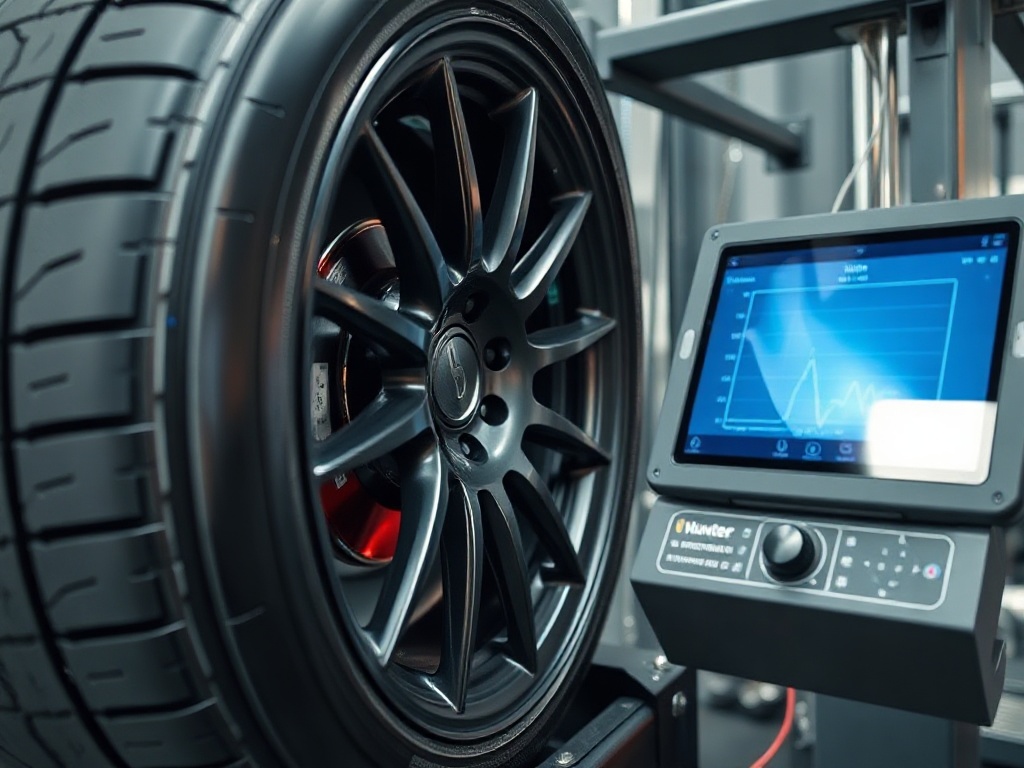
What makes HawkEye Elite dealer-grade
Not the same as a geometric-only alignment.
A standard alignment rig adjusts caster, camber, toe, and thrust angle against the OEM spec. HawkEye Elite runs three additional checks that the standard rig doesn't perform — vibration detection beyond geometric tolerance, a live road simulation run under vehicle weight, and match-mounting of every tyre/wheel assembly for staggered and low-profile fitments.
On a luxury car the difference shows up at speed. A geometry-only alignment leaves radial force variation uncorrected on a 35-series run, and the highway merge that should be quiet never is. HawkEye Elite closes that gap on the same visit — dealer tooling, dealer-grade execution, documented in a written printout.
Hunter road-force balancer reads radial force variation under load — not just static imbalance.
A standard spin balance adds wheel weights to correct static imbalance. The Hunter road-force balancer presses the tyre/wheel assembly against a load roller and records radial force variation — the harmonic component that becomes a 110 km/h steering-wheel vibration even when the angles are within spec. Why it matters on a luxury car: a Mercedes S-Class or BMW 7-Series should not return a wheel vibration any owner can feel in the steering rim; match-mounting against road-force data is the dealer-group method of removing it.
HawkEye Elite four-camera laser read against the manufacturer database for the vehicle's VIN — under vehicle weight on the rack.
A static geometry check ignores how the vehicle's own weight loads the suspension under cornering and braking. HawkEye Elite runs the four-camera laser capture on the loaded vehicle, against the OEM-spec window for that exact chassis, and the resulting printout shows the spec the factory actually published — not a generic target. Why it matters on a luxury car: ride-height sensors, ADAS cameras, and the steering-angle sensor all expect geometry that matches the factory reference; a static read alone can leave small drift that the ADAS calibration later complains about.
Match-mounting every tyre/wheel assembly to its lowest-force point — required on 30/35-series and staggered fitments.
A staggered 255/35 front + 285/30 rear fitment on a Porsche 911 GTS or BMW M3 transmits any residual radial force variation straight into the half-shafts and differential, where it will feel like a drivetrain fault that isn't. Match-mounting against road-force data cancels the transmission path before it starts. Why it matters on a luxury car: a Michelin Pilot Sport or Pirelli P Zero run costs real money, and a road-force alignment is the difference between a wheel set that returns smooth for its full life and one that vibrates unshakable from corner one.
What the rig reports, per marque
OEM angle windows printed against the VIN database.
The HawkEye Elite's four-camera rig prints against the manufacturer's published tolerance band for the chassis on the rack. The windows below are the representative comfort-spec ranges for current-generation platforms across the six marques seen most often at the MFP bays. Actual angles vary by chassis and model year — the rig reads and reports the band for the specific VIN on every visit.
5 Series G60, 7 Series G70, X5 G05 — comfort-spec windows across coil-suspension and adaptive M-chassis.
- Front camber
- -0°30' ± 0°20'
- Rear camber
- -1°00' ± 0°20'
- Front caster
- 6°30' ± 0°30'
- Rear caster
- N/A — trailing arm
- Total toe front
- 0°10' ± 0°05'
- Total toe rear
- 0°10' ± 0°05'
- Thrust angle
- 0° ± 0°10'
M Performance / Competition chassis run -0°45' (front) / -1°30' (rear) with staggered 255/35–285/30 OEM fitments — match-mounting on the road-force balancer required. G-series air-suspension (X5/X7 with adaptive M) demands ride-height sensor reset after strut service.
C-Class W206, E-Class W213/W214, S-Class W223, GLS X167 — multilink rear geometry with active ride-height standard on most modern variants.
- Front camber
- -0°30' ± 0°20'
- Rear camber
- -1°30' ± 0°20'
- Front caster
- 5°00' ± 0°30'
- Rear caster
- N/A — multilink
- Total toe front
- 0°10' ± 0°05'
- Total toe rear
- 0°10' ± 0°05'
- Thrust angle
- 0° ± 0°10'
AIRMATIC chassis (W213 E-Class, W223 S-Class, X167 GLS, GLE W167) require post-alignment ride-height calibration. EQS / EQE EV platforms run a tighter thrust-angle tolerance tied to rear-axle steering geometry.
A6 / A7 / A8 (4K), Q7 / Q8 (4M) — comfort-spec multilink rear with adaptive air-suspension standard on most modern variants.
- Front camber
- -0°30' ± 0°30'
- Rear camber
- -1°30' ± 0°30'
- Front caster
- 4°30' ± 0°30'
- Rear caster
- N/A — multilink
- Total toe front
- 0°10' ± 0°05'
- Total toe rear
- 0°10' ± 0°05'
- Thrust angle
- 0° ± 0°10'
Adaptive air-suspension variants (A6/A7/A8 4K, Q7/Q8 4M) require ride-height sensor reset post-alignment. RS trims (RS3/RS5/RS6/RS7) target -0°45' / -1°45' performance windows with staggered fitments.
911 Carrera / GTS / Turbo (992), Macan, Cayenne, Panamera — staggered fitments standard on 911 variants; PASM dampers on coil-spring trims and air-spring hardware on Cayenne / Panamera / Macan.
- Front camber
- -0°30' ± 0°15'
- Rear camber
- -1°45' ± 0°15'
- Front caster
- 6°30' ± 0°30'
- Rear caster
- N/A — multi-link
- Total toe front
- 0°05' ± 0°05'
- Total toe rear
- 0°10' ± 0°05'
- Thrust angle
- 0° ± 0°05'
911 Carrera / GTS / Turbo run staggered 245/35–305/30 OEM fitments — match-mounting on the road-force balancer required. PASM (electronic damper) plus air-spring hardware on Cayenne / Panamera / Macan 95B requires ride-height sensor reset post-alignment. Thrust tolerance tighter than German RWD benchmarks.
LS / LC on GA-L, ES / RX / IS on GA-K, with AVS (Adaptive Variable Suspension) standard on the larger platforms and F-SPORT variants on RX / IS.
- Front camber
- -0°30' ± 0°20'
- Rear camber
- -1°00' ± 0°20'
- Front caster
- 3°45' ± 0°30'
- Rear caster
- N/A — multilink
- Total toe front
- 0° ± 0°05'
- Total toe rear
- 0° ± 0°05'
- Thrust angle
- 0° ± 0°10'
LS / LC on GA-L run a tighter spec than smaller GA-K chassis. AVS-equipped variants (LS, RX F-SPORT) require ride-height sensor reset post-alignment. F-SPORT trims target -0°45' / -1°15' as a performance window.
Model S/X on air-spring, Model 3/Y on coil suspension — staggered factory Uberturbine 21" fitments on Performance trims and a tighter thrust-angle tolerance than German RWD benchmarks.
- Front camber
- -0°45' ± 0°15' (Performance: -1°00' ± 0°15')
- Rear camber
- -1°30' ± 0°15' (Performance: -1°45' ± 0°15')
- Front caster
- 7°30' ± 0°30'
- Rear caster
- N/A — multilink
- Total toe front
- 0°05' ± 0°03'
- Total toe rear
- 0°05' ± 0°03'
- Thrust angle
- 0° ± 0°05'
Model S/X (air-spring) require ride-height sensor reset post-alignment. Performance trims with staggered factory Uberturbine 21" fitments require road-force match-mounting. Model 3 / Y on factory 18" / 19" / 20" specs are sensitive to thrust-angle mismatch — front-to-rear tire wear delta follows directly.
Typical vehicles served
Where a HawkEye Elite read earns its keep.
HawkEye Elite alignment pricing and protocol varies on chassis, fitment, and whether staggered ride-height sensors or ADAS re-calibration is required at the same visit. The three groups below cover what the bay sees most often.
- Mercedes-Benz S-Class / E-Class / GLC
- BMW 5 Series / 7 Series / X5
- Audi A6 / A7 / A8 / Q7
- Lexus LS / RX
- Model 3 / Model Y Performance
- Model 3 / Model Y Long Range
- 35-series low-profile fitments
- Staggered factory wheel-and-tyre packages
- Porsche 911 Carrera / GTS, Macan GTS
- BMW M2 / M3 / M4
- BMW X5M / X6M
- 255/35 front + 285/30 staggered fitments
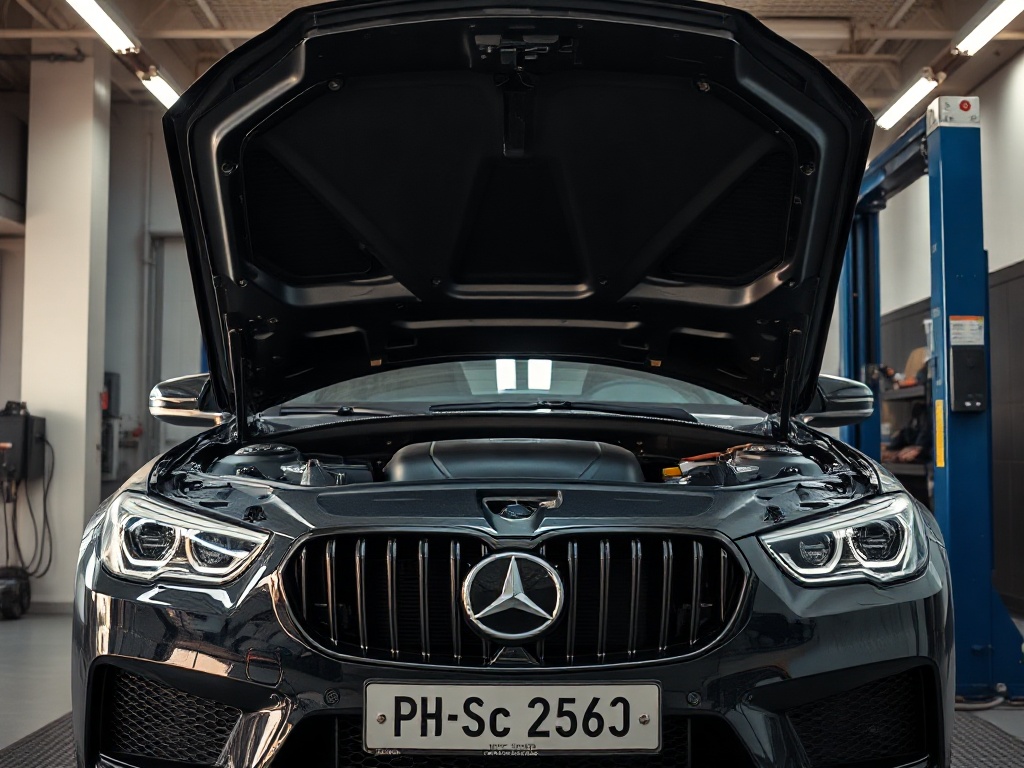
When a GTA owner needs it
Four moments worth a HawkEye Elite read.
A HawkEye Elite alignment is the right next step when any of the four below apply — regardless of whether the steering wheel currently feels centred.
- 01
Tire wear.
Inner or outer edge wear across a staggered run, feathering across the tread blocks, or shoulder-only wear on a low-profile fitment — geometry drift is the leading cause and the only way to know by how much is the HawkEye Elite four-camera read against OEM spec.
- 02
Post-suspension work.
Control arm, spring, strut, subframe drop, or steering tie-rod replacement shifts geometry directly. The part number change moves alignment drift out of spec by definition — measurement after reassembly is non-optional.
- 03
Curb impact.
A hard knock can shift camber or toe where the rim and tyre look fine. Worth measuring before the next long highway trip, especially on staggered low-profile fitments where a one-degree shift shows up on the tread inside months, not miles.
- 04
New tire fitment.
Any new staggered set, any new 35- or 30-series fitment, any new run-flat. Match-mounting against road-force data is the OEM-spec path — skipping it loads the drivetrain from corner 1.
The four-step protocol
Four steps. Same visit. Written before/after printout.
Every HawkEye Elite alignment visit runs the same four-step sequence — pre-scan diagnostic, road-force measurement, live road simulation, then a post-verification printout handed back with the keys.
- Step 01
Pre-scan diagnostic.
Autel Ultra full-network DTC scan before the alignment begins, capturing every module-level flag that interacts with suspension geometry: ride-height sensors, steering-angle sensor, ADAS cameras, and EPS. The baseline is recorded so any flag introduced during the alignment work is visible at the end.
- Step 02
Road-force measurement.
Hunter road-force balancer — each tyre/wheel assembly is run radially against the load roller under controlled pressure. Radial force variation is mapped and the assembly is match-mounted to its lowest-force point, so any residual RFV is corrected by position, not by added wheel weights.
- Step 03
Live road simulation.
The vehicle is lowered onto the rack under its own weight. The HawkEye Elite four-camera laser rig reads caster, camber, toe, and thrust angle against the manufacturer's spec window for the VIN — under vehicle weight, not in a static geometry check that ignores weight transfer.
- Step 04
Post-verification report.
A before/after printout showing the OEM-spec window, the achieved angles, and the road-force data — plus a post-scan confirming no module-level flag introduced during the alignment work. The tablet-screen photograph goes on file with the service record.
/public/photos/hawkeye-report.jpgEquipment specs
HawkEye Elite rig. OEM-certified execution.
The HawkEye Elite rig is the same four-camera OEM-spec laser instrument dealer groups run. The execution is OEM-certified: torque sequences, learned-value resets, and OEM service-info references all traced to the vehicle's VIN.
Four HawkEye cameras mount on the wheels simultaneously, capturing caster, camber, toe, and thrust angle on every wheel at once. The reading goes against the manufacturer database for the vehicle's VIN — comfort or performance spec window, set to the angles the factory left.
- Four-camera passive-target laser head, no calibration drift
- OEM database for every model year in scope
- Comfort and performance spec windows, set to OEM target
- Printout goes on file with the service record
Adjustment to OEM spec. Caster, camber, and toe brought within manufacturer tolerance using OEM-spec fasteners, shims, and adjustment range. Executed by an Ontario 310S-licensed master technician against the manufacturer's published service information.
- OEM-spec torque sequences and fastener catalogue
- 310S-licensed master technician on the wrench
- OEM service-info reference on file with the printout
- Road-force verification on the same visit, not billed separately
Expected pricing
HawkEye Elite pricing — confirmed at the bay.
HawkEye Elite alignment pricing varies on chassis, fitment profile, and whether staggered ride-height sensors or ADAS re-calibration is required at the same visit. See the typical CAD ranges for the four pillars on the pricing page; a firm quote is confirmed after physical inspection at the Richmond Hill or Burlington bay.
- Chassis and OE suspension geometry. Air-suspension and adaptive-damper chassis carry longer adjustment times than a fixed-rate setup.
- Staggered or 30/35-series fitment. Match-mounting and road-force verification adds the load-rolled test against every assembly.
- ADAS re-calibration or ride-height reset. Front-camera re-calibration, ride-height sensor re-learn, and steering-angle sensor reset can be folded into the same visit — quoted after physical inspection.
One clear next step
Book HawkEye Elite Alignment at either GTA bay.
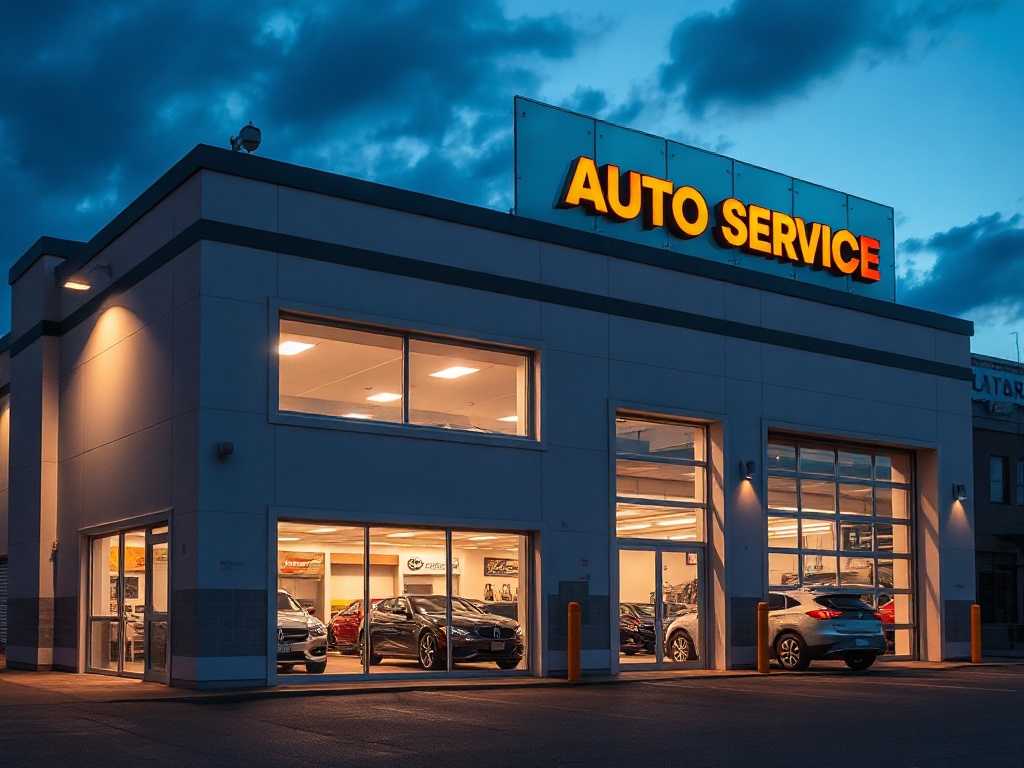
Submit your booking for the Richmond Hill (Yonge Street) or Burlington (Pettit Road) bay. Same HawkEye Elite rig, same road-force verification, same written before/after printout — only the address differs.
Or use the online booking form →Booking intake
Tell us how we can help.
Requested service: Hunter HawkEye Elite Alignment
Or message the front desk
Not ready to book yet? Send a note with the chassis, fitment, and the symptom you're chasing — the front desk routes it to the same technician who runs the bay.
Related
Continue browsing.
Alignment, diagnostics, mechanical repair, and seasonal storage — executed under the same four-step protocol at both Richmond Hill and Burlington bays.
The Hunter road-force verification that sits inside every HawkEye Elite alignment visit — match-mounting each tyre against its lowest force point. Required on staggered and low-profile fitments.
Full-system OE-level ECU access across BMW, Mercedes-Benz, Audi, Porsche, Lexus, and Tesla — paired with a photographed written report you can read without an engineering degree.
9190 Yonge Street, Richmond Hill. Full HawkEye Elite alignment bay, Hunter road-force balancer, and four-lift service floor. Same equipment as the dealer group — same 310S-licensed execution.
1161 Pettit Road, Burlington. Two minutes off the QEW at Burlington/Bronte Road. Same HawkEye Elite rig and Hunter road-force balancer as the Yonge Street bay.
Service deep-dives by marque
HawkEye Elite alignment, written up per marque.
Each marque deep-dive calls out the OEM geometry spec, factory adjustment range, and fitment notes the HawkEye Elite alignment will run against — authored to the same three-step protocol as the service bay.